Tuesday, October 18, 2011

10 GEJALA KANKER YANG HARUS DI WASPADAI PEREMPUAN

10 GEJALA KANKER YANG HARUS DI WASPADAI PEREMPUAN |Perempuan perlu mewaspadai setiap perubahan fisik karena dapat menjadi tanda dari suatu penyakit, khususnya jika mengarah pada gejala kanker. Sedikitnya ada 10 gejala atau perubahan fisik yang bisa mengindikasikan kanker pada perempuan.


Melakukan berbagai pemeriksaan rutin, seperti pemeriksaan pap smear dan mammografi sangat penting untuk deteksi dini jika ada perkembangan suatu kelainan atau penyakit. Kira-kira perubahan fisik atau gejala apa saja yang perlu diperhatikan oleh para wanita?


Seperti dikutip dari WebMD, Sabtu (15/10/2011), menurut para ahli 10 gejala yang sebaiknya tidak diabaikan oleh wanita, antara lain:


1. Perubahan payudara
"Jika merasa terdapat benjolan pada payudara, sebaiknya tidak mengabaikan hal tersebut, bahkan jika hasil mammografi normal," kata Carolyn Runowicz, MD, seorang profesor kebidanan dan ginekologi dari Florida International University's Herbert Wertheim College of Medicine dan mantan presiden dari American Cancer Society.


Jika puting payudara mengelupas, hal tersebut dapat mengindikasikan penyakit Paget yang berhubungan dengan sekitar 95 persen kasus kanker. Puting payudara yang mengeluarkan darah atau cairan tertentu seperti nanah juga harus segera diperiksakan karena dapat mengarah pada kanker payudara.


2. Perdarahan pascamenopause yang tidak teratur
Pendarahan pascamenopause merupakan tanda peringatan karena dapat mengindikasikan sesuatu seperti polip jinak pada endometrium atau sesuatu yang lebih serius seperti kanker endometrium atau serviks.
Perdarahan yang tidak seperti biasanya seperti bercak di luar siklus normal menstruasi juga harus diperhatikan. Saat menopause, perdarahan abnormal sering dikaitkan dengan perubahan hormon, meskipun masalah yang lebih serius dapat menjadi penyebab.


3. Perdarahan rektal
Kanker usus besar adalah urutan ketiga kanker yang paling sering terjadi pada wanita. Darah merah atau gelap yang menyertai feses, harus mendapatkan perhatian. Jika mengalami berak darah, sebaiknya segera berkonsultasi dengan dokter.


4. Keluarnya cairan dari vagina
Cairan kotor dan bau yang keluar dari vagina dapat menjadi tanda dan gejala dari kanker serviks. Cairan tersebut mungkin dapat mengandung darah dan mungkin terjadi antara siklus menstruasi atau setelah menopause. Jika hal tersebut sering terjadi, sebaiknya segera memeriksakan diri ke dokter.


5. Perut sering merasa kembung
Kanker ovarium memiliki gejala yang jelas, salah satunya yang paling sering terjadi adalah kembung. Gejala lainnya di antaranya, perubahan pada kebiasaan usus atau kandung kemih, seperti kencing lebih sering. Selain itu juga dapat terjadi gejala yaitu nyeri panggul.


6. Peningkatan atau penurunan berat badan secara drastis
Menurut American Cancer Society, penurunan berat badan yang tidak dapat dijelaskan dan drastis hingga 10 kg atau lebih dapat merupakan tanda pertama dari kanker. Tanda tersebut seringkali dikaitkan dengan kanker pankreas, perut, kerongkongan, atau paru-paru. Jika tanda tersebut terjadi sebaiknya segera memeriksakan diri ke dokter.


7. Batuk terus-menerus
Jika terjadi batuk terus-menerus yang berlangsung hingga lebih dari 2 atau 3 minggu dan bukan karena infeksi pernapasan atas atau alergi, atau jika batuk dengan dahak yang disertai dengan darah, perlu segera periksa ke dokter. Batuk akibat rokok, baik sebagai perokok pasif maupun aktif juga merupakan faktor risiko kanker.


8. Perubahan pada kelenjar getah bening
Jika merasa kelenjar getah bening di leher atau di bawah lengan berubah menjadi keras, sebaiknya segera memeriksakan diri ke dokter. Bengkak pada kelenjar getah bening seringkali merupakan hasil dari infeksi. Namun limfoma, kanker paru-paru, kanker payudara, atau kanker leher yang telah menyebar juga dapat memunculkan gejala bengkaknya kelenjar getah bening.


9. Kelelahan
Tanda kelelahan yang harus diwaspadai sulit untuk diidentifikasi, namun American Cancer Society mendefinisikannya sebagai kelelahan ekstrem yang tidak dapat berkurang atau membaik dengan istirahat. Jika terus-menerus merasa lelah, segera periksakan diri ke dokter. Leukemia, kanker usus besar, atau kanker perut, merupakan jenis kanker yang dapat menyebabkan kehilangan darah. Sehingga dapat menyebabkan kelelahan.


10. Perubahan pada kulit
Setiap perubahan pada kulit perlu diwaspadai jika sifatnya ekstrem dan tampak mengkhawatirkan, contohnya luka di mulut yang tidak segera sembuh terutama pada perokok atau orang yang sering mengonsumsi alkohol. Hal tersebut mungkin merupakan tanda kanker mulut dan harus diperiksa oleh dokter.


Perubahan pada tahi lalat atau lesi berpigmen pada kulit juga dapat menandakan kanker.
Sepuluh tanda dan gejala diatas harus diperhatikan dan sebaiknya diwaspadai, sehingga sebaiknya segera memeriksakan diri ke dokter jika terjadi gejala-gejala tersebut. Diagnosis dini mempengaruhi keberhasilan penyembuhan suatu penyakit.detikhelth.com


Ternyata Dari Setetes Asi Bisa Di Buat Jadi Organ Tubuh

Teknologi sel punca atau stem cell memungkinkan sel apapun diubah dan dikembangkan menjadi suatu jaringan atau bahkan organ tubuh. Bahan bakunya tak harus berasal dari plasenta atau sumsum tulang, kini ASI (Air Susu Ibu) juga bisa dibuat stem cell.

Para ilmuwan dari University of Western Australia (UWA) mengatakan kelebihan utama stem cell dari ASI adalah jauh lebih mudah didapat. Cara memperoleh ASI cukup dengan memeras sedangkan embrio, plasenta atau sumsum tulang harus lewat prosedur yang lebih rumit.


Meski dikeluarkan kelenjar-kelenjar di payudara, stem cell dari ASI juga tidak harus dikembangkan menjadi jaringan payudara saja. Sama seperti kebanyakan stem cell dari sumber lain, stem cell dari ASI juga bersifat pluripoten dalam arti bisa dikembangkan menjadi jaringan apapun.

Para ilmuwan bahkan mengklaim, stem cell dari ASI bisa dikembangkan menjadi organ-organ atau jaringan apapun yang sewaktu-waktu bisa digunakan untuk pencangkokan. Jaringan atau organ yang bisa dibuat dari ASI antara lain tulang, sendi, otak, lemak atau bahkan hati dan pankreas.

"Jika kita memahami komponen ASI dan cara kerja sel-sel yang terlibat dalam proses menyusui, maka kita bisa memakainya sebagai model untuk terapi stem cell yang inovatif," ungkap Foteini Hassiotou yang memimpin penelitian itu, seperti dikutip dari Indiavision, Selasa (18/10/2011).

Di Australia sendiri, tiap tahun diperkirakan ada 1.000 kali pencangkokan stem cell sedangkan di seluruh dunia angkanya mencapai 60.000 tiap tahun. Terapi pencangkokan stem cell biasanya dilakukan untuk mengatasi penyakit-penyakit yang dipicu oleh kerusakan sel, seperti parkinson dan diabetes.

Secara prinsip, pengembangan stem cell hampir mirip dengan teknologi kloning atau menggandakan makhluk hidup tanpa melalui proses perkawinan. Bedanya, kloning dibuat dari stem cell berjenis totipoten sedangkan stem cell untuk terapi biasanya menggunakan jenis pluripoten atau multipoten.(detik.helth.com)

Monday, October 17, 2011

Cancer Diet - Minerals

A cancer diet needs a good balance of minerals because minerals are needed by all cells for proper function. Patients are often found to be mineral deficient, so this is an area of the diet that needs particular attention.
There are two classes of minerals. Macrominerals, such as the well known calcium, magnesium, sodium, potassium and phosphorus, and microminerals, such as boron, chromium, copper, iron, iodine, germanium, sulfur, silicon, vanadium, zinc, manganese and molybdenum.
The good news is we will get most of the minerals we need, provided we are eating a diet based on a wide variety of fruits and veggies, with the addition of nuts, seeds and grains.

Where we can get in to trouble is that minerals are washed out of soils with constant rain, and modern fertilizers don't usually contain the wide variety of minerals we need. Organic gardeners usually use rock minerals on their soils and this results in organic produce have a much higher and broader range of minerals.
Germanium is one micromineral that cancer patients are often low on. It is essential for immune function and is critical to tissue oxygenation. Cancer grows rapidly where there is low oxygenation of cells. Germanium is found in broccoli, celery, garlic, onions, rhubarb, sauerkraut and tomato juice as well as aloevera and ginseng.
Iodine deficiency has been linked to breast cancer in more than one study. Seasalt contains iodine and a variety of minerals rather than the isolated highly processed iodine additive in table salt. Asparagus, garlic, lima beans, soybeans, sesame seeds all contain natural iodine along with the nutrients needed for good absorption.
Large amounts of brassicas eg brussels sprouts, cabbage and cauliflower, along with peaches, pears and spinach can block absorption of iodine, so ensure there is a balance of iodine rich foods in your diet.
Selenium has been linked to cancer. Selenium and Vitamin E work together to attack free radicals. Selenium is critical for pancreatic function, and pancreatic enzymes are critical to the bodies ability to fight tumour activity. This mineral is generally found in meat and grains, however countries such as New Zealand and much of America is known to have selenium deficient soils.
As there have been several studies showing that good selenium levels have significantly reduced the risk of cancer, this is one mineral you want to have enough of.
Food sources that should be included frequently in a cancer diet are: brazil nuts, broccoli, brown rice, brewers yeast, chicken, kelp, onions, salmon, seafood, tuna, wheatgerm and whole grains. Garlic, chamomile, ginseng and parsley are all easy to use concentrated forms that can be added to the diet daily.
A couple of warnings:
Be very careful about self-dosing with minerals as several of them will block absorption of others if the dose is too high.
Again, eating a variety of foods, with particular notice taken of those that have high mineral levels is the safest way to go. If you wish to explore mineral supplementation further, talk to your naturopath or nutritionist. But whatever you do, don't ignore the importance of these vital elements to your well being. 
(cnn.com)

James Bond's 'Quantum of Solace' speedboat is show's star turn

A superboat custom built for the most recent James Bond blockbuster was the star act at the Scotland Boat Show, a three-day show at the weekend.

The "Quantum of Solace," a 43-foot Sunseeker Superhawk, is one of three used during the chase sequence in the 2008 film of the same name.

And its owner, Robin Porter, had his own action adventure while test-driving the boat off the coast of Marmaris in Turkey.

Porter, who bought the vessel in late January but did not realize its celebrity origins at the time, says he found himself in a James Bond-like scenario, when he unwittingly traveled into dangerous waters.

He says, "It was a beautiful, nice day and we took the boat for a run. Out of the harbor and into the bay, from out of nowhere really, there was a boat with men wearing balaclavas covering their faces and AK-47s.
We took the boat for a run ... From out of nowhere, there was a boat with men wearing balaclavas covering their faces and AK-47s.
Robin Porter, owner of the 'Quantum of Solace'

"We were in restricted waters and the little hamlet bay nearby was actually part of naval waters," he continued. "We were taken to be questioned and we didn't have the ship's papers because this was a test drive of the boat so we had to get the coast guard involved.

"Then they asked 'Have you been drinking?' We had to be taken to the hospital for a drugs test. We couldn't even go to the bathroom without a guard outside. We got interrogated about why we were in Turkey and we wanted to buy this boat, " he added.

The fastest things on water

Eventually their eight-hour detention came to an end as authorities involved realized it was a simple case of being in the wrong place at the wrong time.

Despite this slight hiccup, Porter says things have been smooth sailing since his return to the UK and is delighted the boat was part of the show.

Since he found out about "Quantum of Solace"'s Hollywood provenance, he has decked out the boat with custom James Bond accessories.

"Recently we've done up the boat and it has been liveried up with 'Quantum of Solace' along the side, monograms, James Bond things," he says.

Porter declined to tell CNN how much he paid for the boat. Other Sunseeker Superhawks are currently on sale for between £250,000-£300,000 ($400,000-$475,000).

"If some people get some sort of enjoyment out of seeing or use out of it, then we are happy ... It's as fast as it looks and extremely comfortable," he said.

"Quantum of Solace" was on display for the public to visit during the show at at Kip Marina, Inverkip, west Scotland.

Around 7,000 visitors visited the show, organizers said.

Ten marine movies for a sail-in cinema

The 43-foot Sunseeker was part of a larger Bond theme at the show: More James Bond icons lined the shore including a collection of five Aston Martins and the full range of all five Rolls Royce vehicles usually reserved for villains of the blockbusters.
(cnn.com)

With 7 billion on earth, a huge task before us

Just 12 years after the arrival of the 6 billionth individual on the planet in 1999, humanity will greet the 7 billionth arrival this month. The world population continues its rapid ascent, with roughly 75 million more births than deaths each year. The consequences of a world crowded with 7 billion people are enormous. And unless the world population stabilizes during the 21st century, the consequences for humanity could be grim.

A rising population puts enormous pressures on a planet already plunging into environmental catastrophe. Providing food, clothing, shelter, and energy for 7 billion people is a task of startling complexity.


The world's agricultural systems are already dangerously overstretched. Rainforests are being cut down to make way for new farms; groundwater used for irrigation is being depleted; greenhouse gases emitted from agricultural activities are a major factor in global climate change; fertilizers are poisoning estuaries; and countless species are threatened with extinction as we grab their land and water and destroy their habitats.

The economic challenges are equally huge. Population is growing most rapidly in the world's poorest countries -- often the places with the most fragile ecological conditions. Poor people tend to have many more children, for several reasons. Many live on farms, where children can be engaged in farm chores.

Poor societies generally suffer from high rates of child mortality, leading parents to have more children as "insurance" against the possible deaths of children. Girls rarely make it to high school, and are often married at a very young age, leading to early childbearing. And modern methods of contraception may be unavailable or unaffordable.
Jeffrey D. Sachs
Jeffrey D. Sachs

When poor families have six or eight children, many or most of them are virtually condemned to a lifetime of poverty. Too often, parents lack the wherewithal to provide decent nutrition, health care and education to most of them. Illiteracy and ill health end up being passed from generation to generation. Governments in poor countries are unable to keep up, their budgets overmatched by the need for new schools, roads and other infrastructure.

So the arrival of the 7 billionth person is cause for profound global concern. It carries a challenge: What will it take to maintain a planet in which each person has a chance for a full, productive and prosperous life, and in which the planet's resources are sustained for future generations? How, in short, can we enjoy "sustainable development" on a very crowded planet?

The answer has two parts, and each portends a difficult journey over several decades. The first part requires a change of technologies -- in farming, energy, industry, transport and building -- so that each of us on average is putting less environmental stress on the planet. We will have to make a worldwide transition, for example, from today's fossil-fuel era, dependent on coal, oil and gas, to an era powered by low-carbon energies such as the sun and wind. That will require an unprecedented degree of global cooperation.

The second key to sustainable development is the stabilization of the global population. This is already occurring in high-income and even some middle-income countries, as families choose to have one or two children on average. The reduction of fertility rates should be encouraged in the poorer countries as well. Rapid and wholly voluntary reductions of fertility have been and can be achieved in poor countries. Success at reducing high fertility rates depends on keeping girls in school, ensuring that children survive, and providing access to modern family planning and contraceptives.

Two centuries ago, the British thinker Thomas Robert Malthus famously warned that excessive population growth would cut short economic progress. That is a threat still with us today, but it is a warning, not an inevitable outcome.

We face an urgent task: to adopt more sustainable technologies and lifestyles, and work harder to achieve a stable population of some 8 billion or so by mid-century, rather than the current path, which could easily carry the world to more than 10 billion people by 2100.

(cnn.com)

Climate change is shrinking species, study warns

Climate change is shrinking many plant and animal species and is likely to have a negative impact on human nutrition in the future, according to a new study.

Rising temperatures and growing variability in rainfall are affecting the size of all species in the ecosystem from microscopic sea organisms to land-based predators, say researchers.

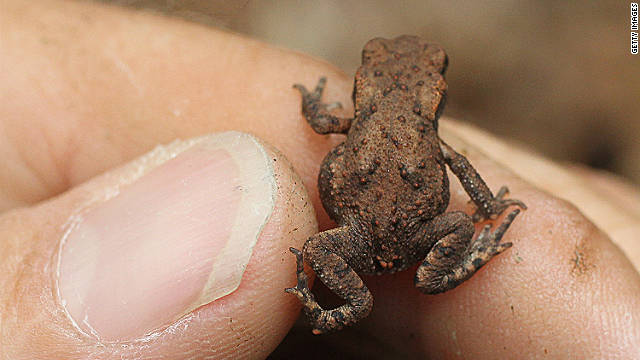
"Our study suggests that ectotherms (cold-blooded animals like toads, turtles, and snakes that rely on environmental heat sources) are already changing a lot," said David Bickford from the National University of Singapore and co-author of the study.

Both aquatic and terrestrial ectotherms have been shrinking, according to the study, with common toads' size and condition decreasing as temperatures rose 1.5 degrees Celsius over a 22-year period.

The study, published in the journal Nature Climate Change, draws on evidence from fossil records, experimental and comparative studies, as well as research implicating anthropogenic climate change over the last 100 years.

"What was most surprising to me was that it was such a uniform signal across all these different organisms," Bickford said.
What was most surprising to me was that it was such a uniform signal across all these different organisms
David Bickford, National University of Singapore

Fossils from a warming phase during the Palaeocene-Eocene Thermal Maximum (around 55 million years ago) reveal that burrowing invertebrates such as beetles, bees and ants shrank in size by up to 75%.

Other fossil records indicated that animals including pocket gophers, woodrats and California squirrels, also shrank during past warming periods, say researchers.

Experimental studies which increased water acidification -- an observed effect of rising atmospheric carbon dioxide levels -- revealed marine species like corals, scallops and oysters become smaller.

Each degree of warming has been shown to decrease the size of marine invertebrates by up to 4%, salamanders up to 14% and fish by up to a maximum of 22%, according to the study.

But perhaps most worrying for marine life was the reduced growth rates of phytoplankton in response to acidification which "could negatively affect all ocean life because (it) forms the basis of the marine food web."

Researchers also say plants, which were generally expected to get larger as CO2 levels rise, are not immune from reductions.

"Over the past century, various plant species have shown significant negative correlations between growth and temperature...resulting in smaller grasses, annual plants and trees in areas that are getting warmer and drier," according to the study.

The study cites experiments manipulating temperature showing biomass in some grass, grain and fruit plants was 3-17% smaller for every degree Celsius of warming.

But there are exceptions to the trend.

Recent studies have indicated that the common lizard, mallard and teal ducks, otters and some birds are increasing in body size, say researchers, but many of these inhabit high latitudes which have witnessed increased growing seasons associated with global warming making patterns of shrinking less common.
What we might see is that there are many ecological buffers out there. These systems are incredibly resilient
David Bickford, National University of Singapore

However, this might be short-lived if climate change increases in severity, according to the study.

Average global temperatures rose by nearly one degree Celsius over the past 100 years, according to the Intergovernmental Panel on Climate Change (IPCC), but worst-case scenarios predict warming of up to seven degrees Celsius by 2100.

The study's authors concede many factors will play their part in the size of organisms if warming trends continue, but highlight reduced availability of water and lower levels of soil nutrients as key factors for plants, and the animals that feed off them.

Bickford says more experiments need to be done to find out which mechanisms are important to different organisms in different places.

And scientists also need to discover how ecological balances are going to be disrupted in the future and what this will mean for different species up and down the food chain, he says.

"What we might see is that there are many ecological buffers out there. These systems are incredibly resilient. Nature has an amazing adaptive capacity," Bickford said.

But shrinking trends in the ecosystem are likely to impact heavily on humans, say the authors.

The study points out that nearly one billion people rely on fish as their main source of protein, and increasing variability in rain will make crop cultivation more difficult in many areas in the future.

"We've probably got such diverse food source system out there already that its going to a long time before it affects richer countries certainly. But it might not be so long for poorer countries unfortunately," Bickford said.

(cnn.com)

Friday, October 14, 2011

How to Keep the Mind To Stay Fresh

The first situation to consider is the relationship between thoughts and conditions like depression and stress. A crucial question is whether the person's thoughts are creating the physical depression or the physical depression is creating the negative thinking. When it comes to how you can use your mind to help, this can be accomplished consciously and subconsciously. When someone has a habit of imagining things turning out very badly, rational thinking can show show them that they often exaggerate. However, the unconscious mind is much more powerful in shaping our habitual behavior, oftentimes beyond our conscious control. Visualization and hypnosis can be very effective in modifying beliefs and, if you do this, the long-lasting effects can be more powerful than using logic only.


It is likewise true that positive thinking can have an impact on our physical health, and you may be aware of the placebo effect on people who feel ill. This is when individuals are given a pill which in reality does not have any healing value, and yet they claim to notice an improvement in how they feel. This is evidence of the connection between mind and body, and there are many examples of men and women with a positive outlook being able to recover faster from malady and injury. You can also use the power of your mind to help you in achieving your fitness goals. A historic example of this is when the four minute barrier for running the mile was broken, which had been considered as unachievable up to that point. Once the "barrier" had been broken, other runners also began to break through what had really been a barrier of belief.

The effects of aging are likewise influenced by how we think about the process. As you get older, do you talk to your friends about your "aches and pains" and your weakened capabilities? It seems there's a great deal of truth to the saying, "You're only as old as you think you are," and our thoughts can be used to undo a lot of the so-called effects of aging. Unfortunately, numerous individuals will continue to hold on to old beliefs about the unavoidable "decline" of health in old age, and not pay attention to the benefits of a positive outlook.

Now that you are aware that your attitude can bring you a much better state of health, it's up to you to take advantage of this information and set your intention to think positive thoughts whenever you remember.